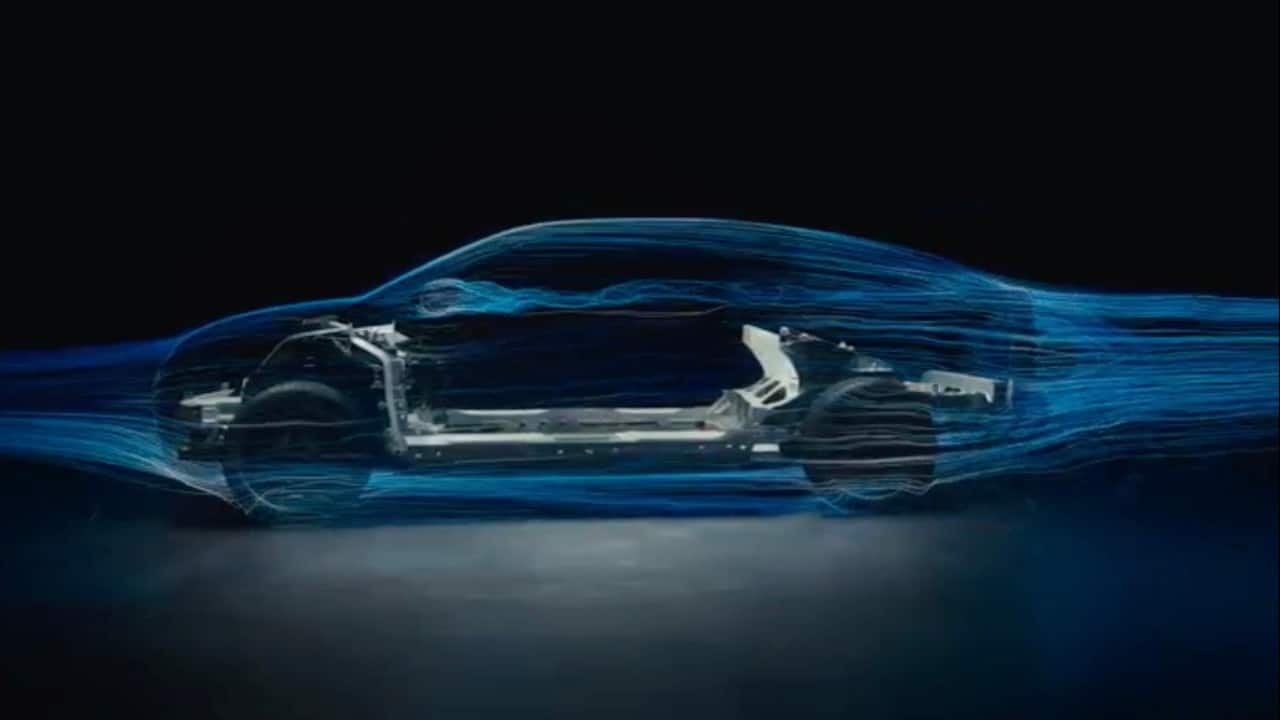
Our aerodynamics team spent a large portion of their careers obsessed with details that most people can’t see. More than half of our aero team came from the Formula 1 world, where air is either your greatest ally or most punishing enemy.
When you’re chasing milliseconds on a lap time, every curve and every millimeter matters.
That same obsession helped us make our new mid-size electric truck’s aerodynamic efficiency more than 15% better than any other pickup truck on the market today and will ultimately result in longer range and lower cost for our customers.(1)
F1 Influence: Fail Fast, Learn Faster
To bring our new mid-size electric truck to life, we didn't just look to the automotive industry for inspiration — we looked to the racetrack. By adapting a Formula 1-inspired development cycle, we shifted our focus toward a "fail fast, learn faster" mentality.
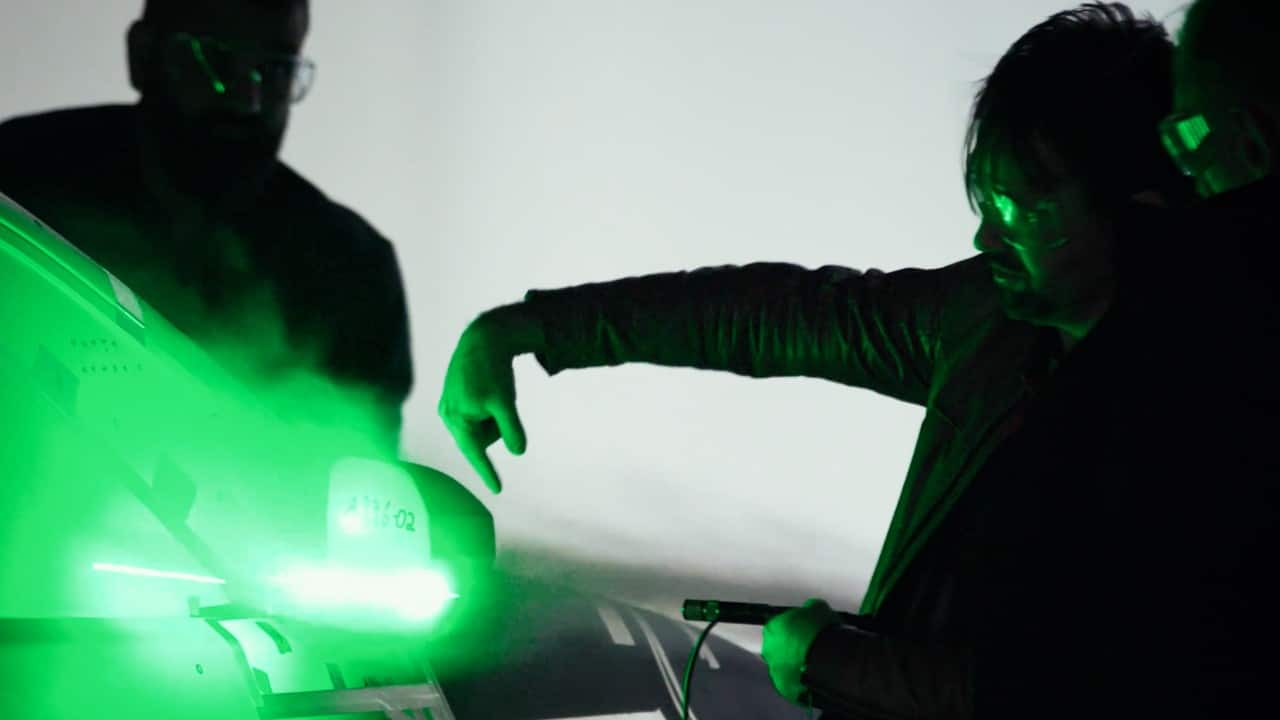
Historically, wind tunnels are used at the end of a project to validate a design and when little can be changed. We flipped that. We used the wind tunnel as a development tool as designers were just starting to put pen to paper, operating with the urgency of a race team pit crew.
To achieve this, we utilized a modular "LEGO(r) -like" build for our test vehicle. This allowed us to swap 3D-printed and machined parts — from under-body shields to front fascia to suspension — in as little as minutes. We tested thousands of 3D-printed components, including versions of the suspension and drive units that didn't even exist as functional prototypes yet. We measured the forces that would change as a result in the vertical, longitudinal, and lateral directions on a 1.2mm steel thick car-sized treadmill that matched the air speed at 87 mph.
Since these 3D-printed parts were accurate within fractions of a millimeter of our simulations, it allowed us to develop a deeper, data-driven understanding of how every single detail impacts range and efficiency in the real world.