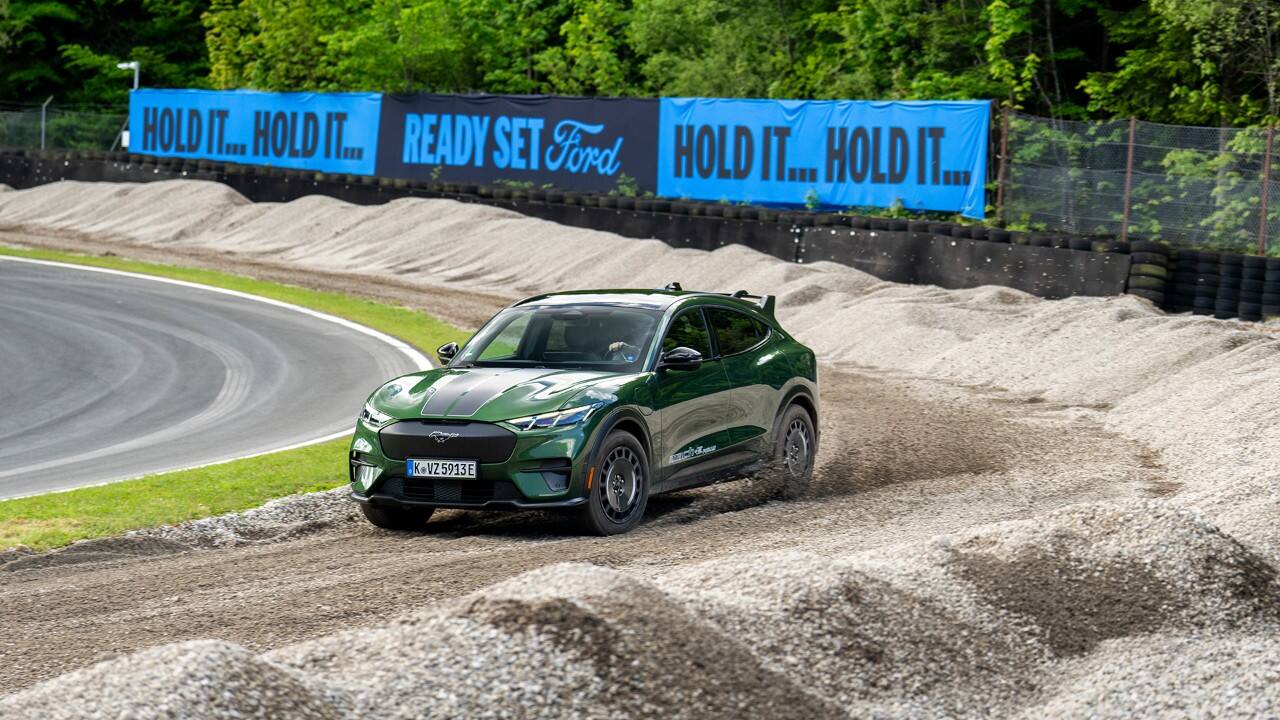
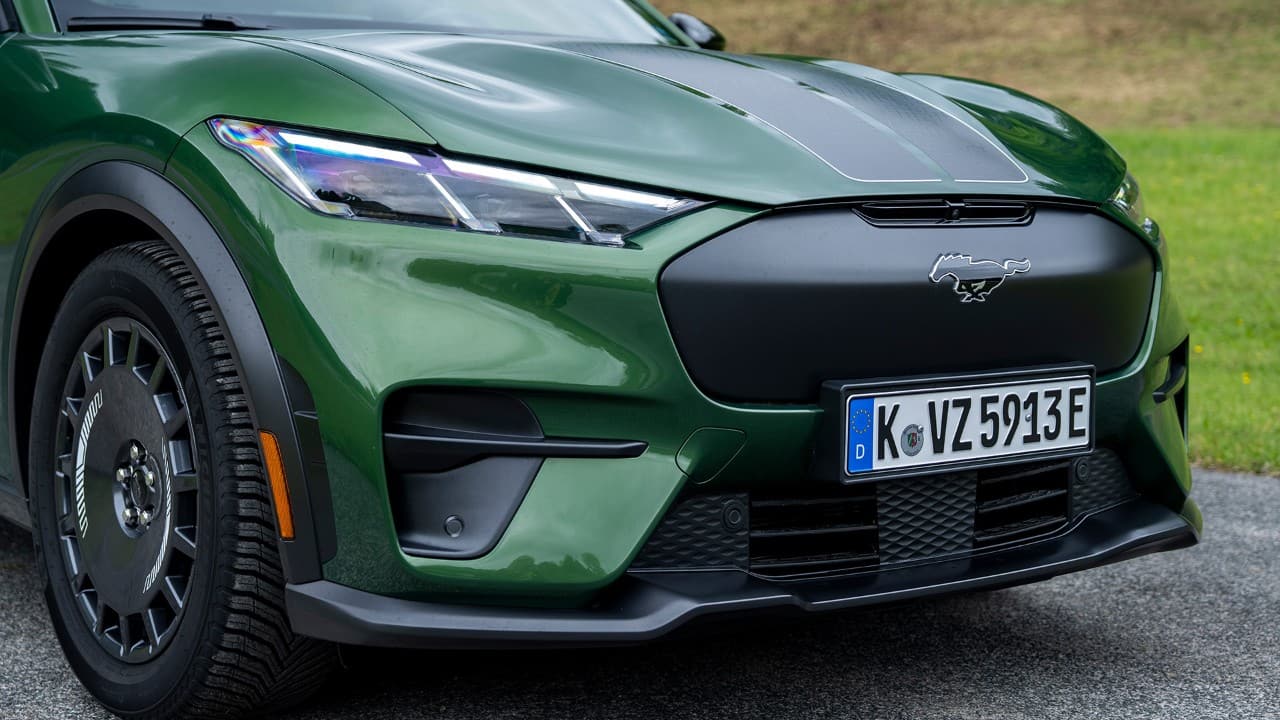
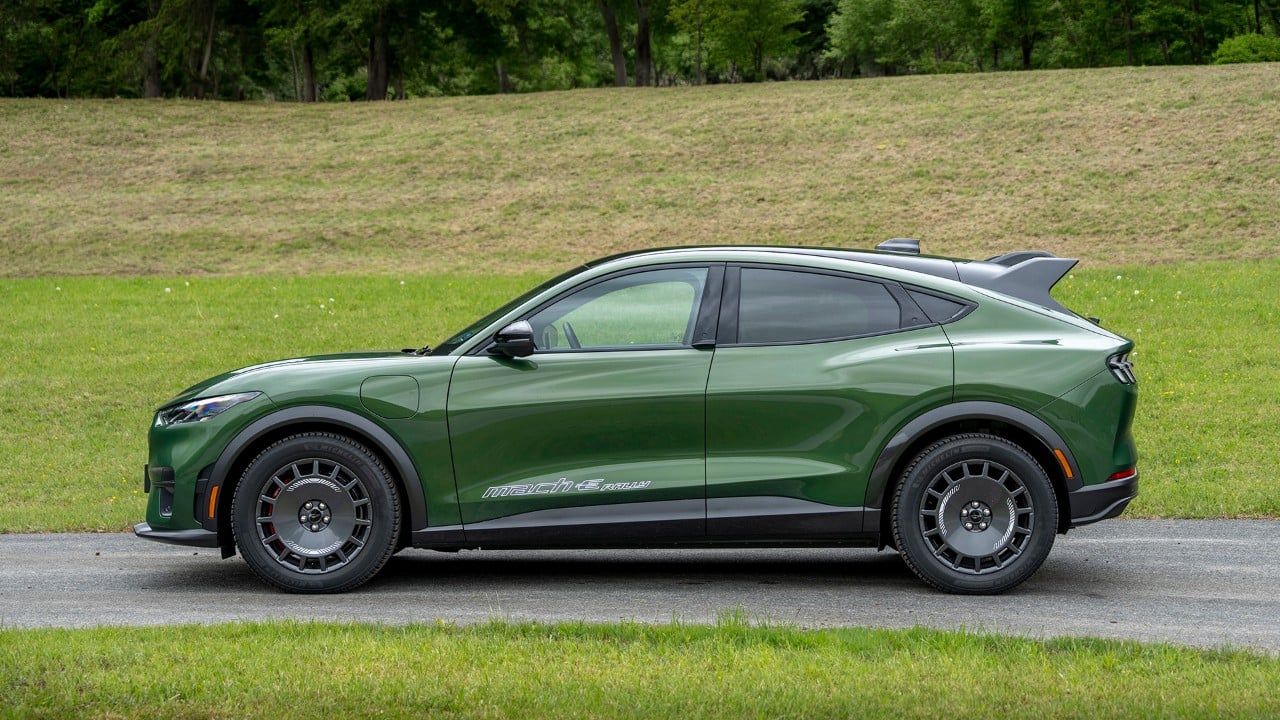
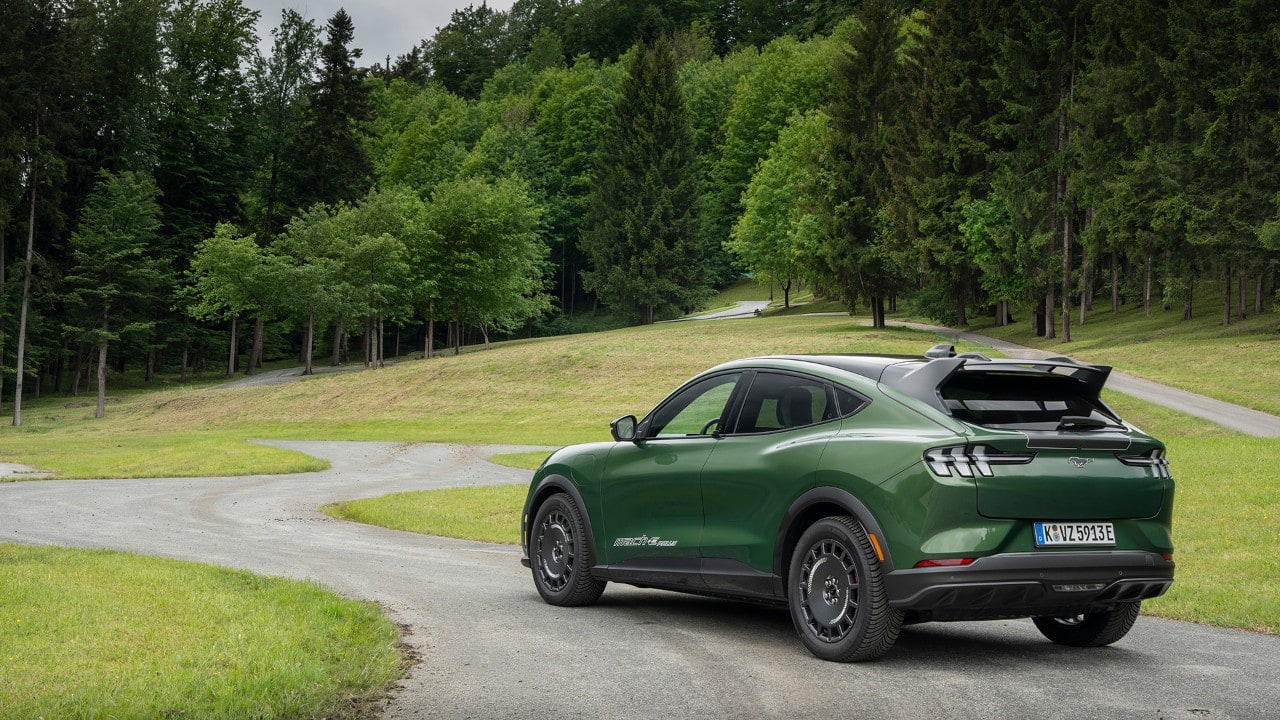
“Our Mustang Mach-E Rally has a near-50/50 weight distribution, something which is harder to achieve with a combustion-engined car, and the drive battery is placed low in the chassis to keep the centre of gravity as low as possible.
“You also need power and torque — as well as strong acceleration, being able to adjust the throttle precisely is essential to controlling the drift. Electric motors are ideal in this scenario as they offer instant torque — and you never run out of revs. Being based on the Mustang Mach-E GT, the Rally version is not short of either, with 487 PS and 950 Nm of torque.”
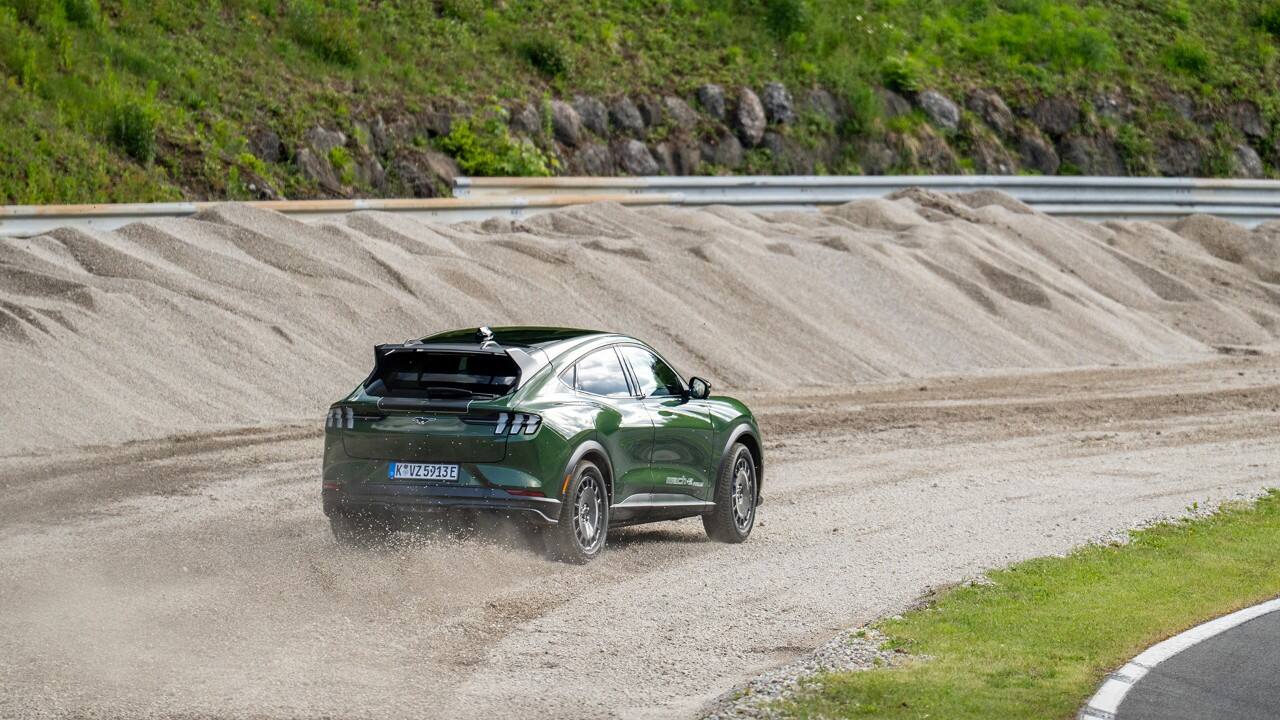
The Mustang Mach-E Rally has another ace up its sleeve too - the RallySport drive mode. This alters the settings of the traction control, stability control and power distribution to make drifting easier and more controllable. And, although the Mustang Mach-E Rally is four-wheel-drive, the amount of power sent to the wheels is automatically adjusted, delivering more power to the rear to begin the slide and then increasing the amount sent to the front to help control the slide on the exit of the turn.
“The most difficult part of drifting an electric car is learning the skill in the first place,” Geert adds. “Drifting is probably the driving style that’s most closely related to learning to ride a bicycle. Someone can explain the mechanics and tell you what to do, but you have to experience the wobbles yourself, teaching your body to interpret the forces acting on you and the messages the car feeds you through the steering wheel to understand what’s happening.
“A car that communicates is essential so you can make the right inputs to stay in control, and that’s a feature we build into every Ford car, from Puma through to the Mustang Mach-E Rally. And just like riding a bicycle, that eureka moment of catching and holding a drift is a joyous feeling. It takes a lot of time to become an expert — but the practice is a lot of fun.”