Search Enterprise or @FordOnline
Please remove special characters

Meet the Ford Lighting Team Leading a New Era of Brand Expression

Apr 17, 2026


Next time you look in your rearview mirror and see the unmistakable triple-bar signature of a Mustang or the distinctive lighting of a Nautilus drawing closer, consider this: You’re observing a fundamental shift in automotive branding.

As traditional grilles fade in the era of electrification, lighting has become the primary medium through which Ford vehicles express their unique brand identity to the world. 

“Advanced lighting is central to our design excellence, perceived quality, and brand expression,” said Scott Anderson, Sr. Director of Ford Design's XLAB. “It's one of the fastest-growing drivers of overall vehicle experience and brand identity — and increasingly where customers judge a product’s technical sophistication.”

The Philosophy of Light

The power of lighting as an expression lies in its capacity to convey a vehicle’s fundamental energy. On the exterior, it’s a hallmark of technology and visual identity. Inside the cabin, it creates a warm, inviting space and emotional resonance.e. 


Lighting also functions as a powerful means of owner self-expression. Take the Mustang Mach-E, with its signature triple light array. Its angled cuts look sporty and aggressive, while the tri-elements resonate with enthusiasts who know the Mustang’s history. And for off-road aficionados, the Ford Raptor T1’s lighting conveys purpose with its combination of focused and powerful forward lighting.

Perhaps no one understands the nuance to good lighting better than the Ford lighting studio team, led by Robert Laster and Ariel Choi. For this team, the best automotive lighting doesn’t start with technology — it starts with emotion. 

“Good lighting gives you an emotional response as you approach the vehicle and it comes to life,” said Laster. “Lighting must communicate the capability and personality of the vehicle and be executed with precision.”

Good lighting gives you an emotional response as you approach the vehicle and it comes to life.
Robert Laster
Chief Designer for Advanced Lighting

The team draws inspiration for their designs from many places, whether it’s science fiction media, a sunset fading into the night sky, or their fellow colleagues. With each design, they aim to balance the vehicle’s unique spirit with Ford’s deep design heritage.

The New Language of Light: A Human-Centric Evolution 

As technology continues to advance and designers push creative boundaries, the landscape of lighting design is poised for even greater transformation. This rapid evolution will far surpass previous development cycles. What once took five or more years to materialize is now appearing annually — or even faster.

Consider lighting’s role in artificial intelligence (AI) and autonomous systems. "In the future, it's not just going to be lighting for humans, but lighting for AI or self-driving systems to communicate with each other," said lighting designer Jiachen Xu. 

“Lighting is becoming a vital language for autonomous systems. Bringing these two worlds together — the expressive and the technical — requires new synergy between design and engineering.”

Lighting is becoming a vital language for autonomous systems.
Jiachen Xu
Lighting Designer

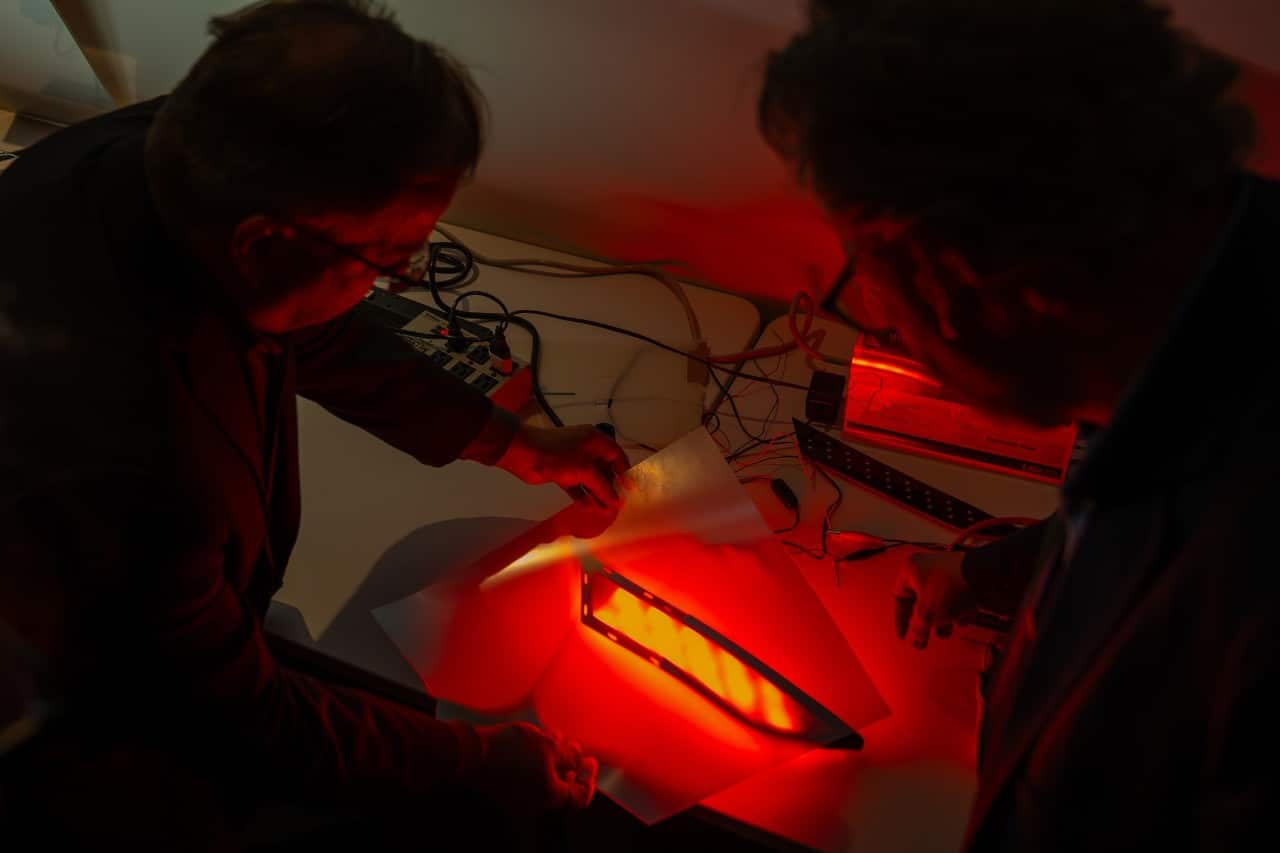
Beyond rapid technological advancements, the Ford lighting designers are boldly expanding their vision — experimenting with new aesthetic forms, leveraging innovative films for unique effects, and incorporating natural elements into their concepts.

“We are experiencing a new age of lighting,” said designer Nicolas Molina. “It's been done excessively, and now it's getting nuanced, which is taking it to the next level. It's going to be all about the little touches — not just super big in front of you. And how it can give you a feeling of expression, something more human." 

Today, the prominence of signature lighting in modern vehicle design is undeniable. Of course, safety remains paramount — ensuring drivers can see ahead and that others can see them — but lighting also shapes the vehicle’s story and creates a visual identity customers can connect with emotionally. Increasingly, lighting defines a vehicle as uniquely Ford.