Search Enterprise or @FordOnline
Please remove special characters

The woman behind the data: A race engineer’s journey to the WEC

Mar 26, 2026


It’s with immense excitement and a deep sense of purpose that I find myself representing the Blue Oval for the very first time. I’ve officially joined Ford Racing as a race engineer on the all-new Hypercar program, and I couldn’t be more thrilled to be part of this incredible journey from its inception.

Motorsport has always been my passion. From my earliest days, pulling apart radios and watching Formula 1 with my sister, I was captivated by what these machines could do and how they could be optimized. My career has taken me through various paddocks and series, from winning the 24 Hours of Le Mans three times with Audi to working in IndyCar and Extreme E. Each experience has built on the last, honing my skills and deepening my understanding of what it takes to succeed at the highest level.

But joining Ford Racing now, at the very start of their new Hypercar program in the FIA World Endurance Championship (WEC), feels different. It's a fresh page, a blank canvas and an opportunity to build something truly special from the ground up. Ford’s commitment to returning to the pinnacle of endurance racing is palpable, and the ambition to compete for overall honors at Le Mans, much like Ford’s legendary triumphs in the 1960s, is incredibly inspiring.

WEC tests every aspect of a team — from the car's durability and performance to the crew's precision and the drivers' endurance.
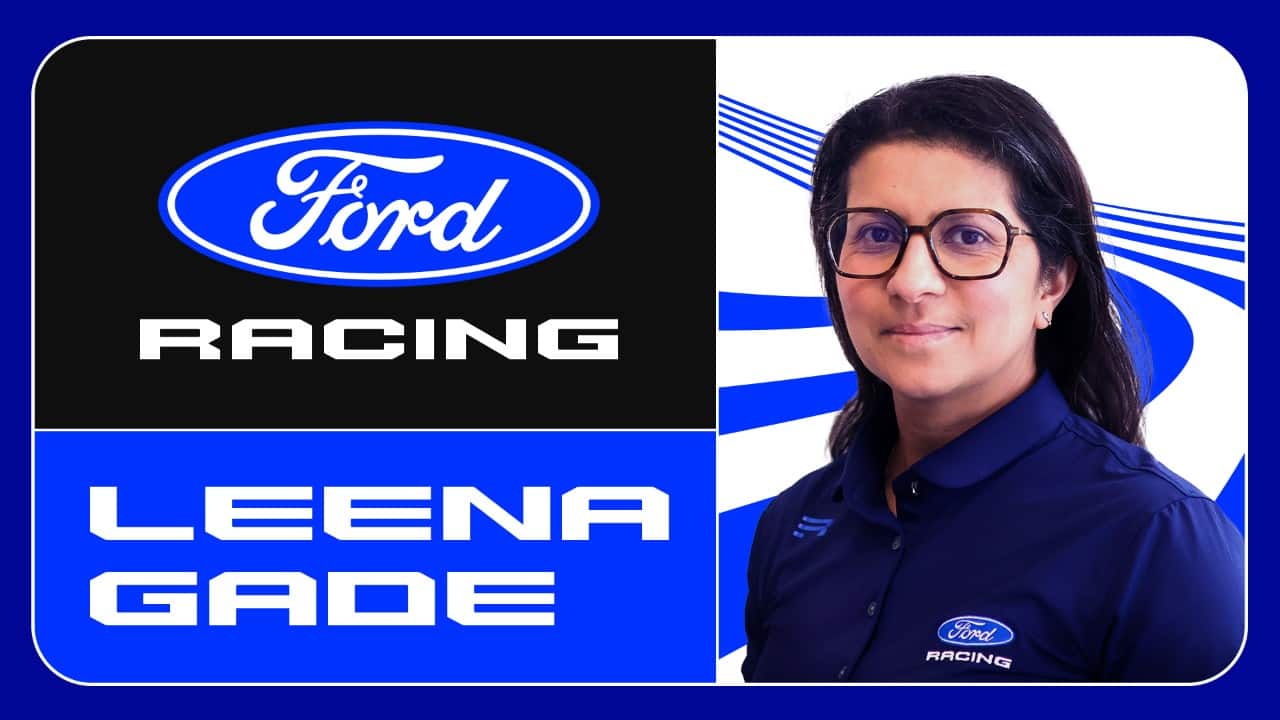
Leena Gade

The role of a race engineer is multifaceted, demanding a constant blend of technical expertise, strategic foresight and clear communication. It's about understanding every nuance of the car, working hand-in-hand with the drivers to extract maximum performance, and making critical, split-second decisions in the garage regarding strategy, fuel and tires. In endurance racing, where races span six, eight or even 24 hours, the challenge is amplified, requiring meticulous preparation and unwavering focus.

What excites me most about this particular program is Ford Racing’s decision to run the Hypercar effort entirely in-house. This approach fosters a direct connection between the road-car technology and the race program, allowing for rapid innovation and a truly integrated team culture. I’m eager to contribute to building this team, shaping our processes and developing a car that will not only be competitive but will also embody Ford's engineering prowess.

WEC tests every aspect of a team — from the car's durability and performance to the crew's precision and the drivers' endurance. To be part of a new entry, tackling these challenges head-on, is an engineer’s dream. We are at the very beginning, with many hours of development, testing and hard work ahead of us but I’m ready for the challenge.

The journey to the top of the WEC, and ultimately to the top step of the podium at Le Mans, will be arduous, but I have no doubt we can achieve great things. This is more than just a job; it’s an opportunity to write a new chapter in Ford Racing’s motorsport history, and I’m incredibly proud to be a part of it. 


Leena Gade is a highly-experienced British race engineer, employed by Ford Racing at the start of 2026 to work on its new Hypercar program. Gade became the first female race engineer to win the 24 Hours of Le Mans in 2011 with Audi and went on to repeat the achievement in 2012 and 2014. She was also on the FIA Women in Motorsport Committee for nine years. With a background in aerospace engineering, Gade played a key role in developing the dominant Audi R18 prototype and has also worked in IMSA, IndyCar and Extreme E.