


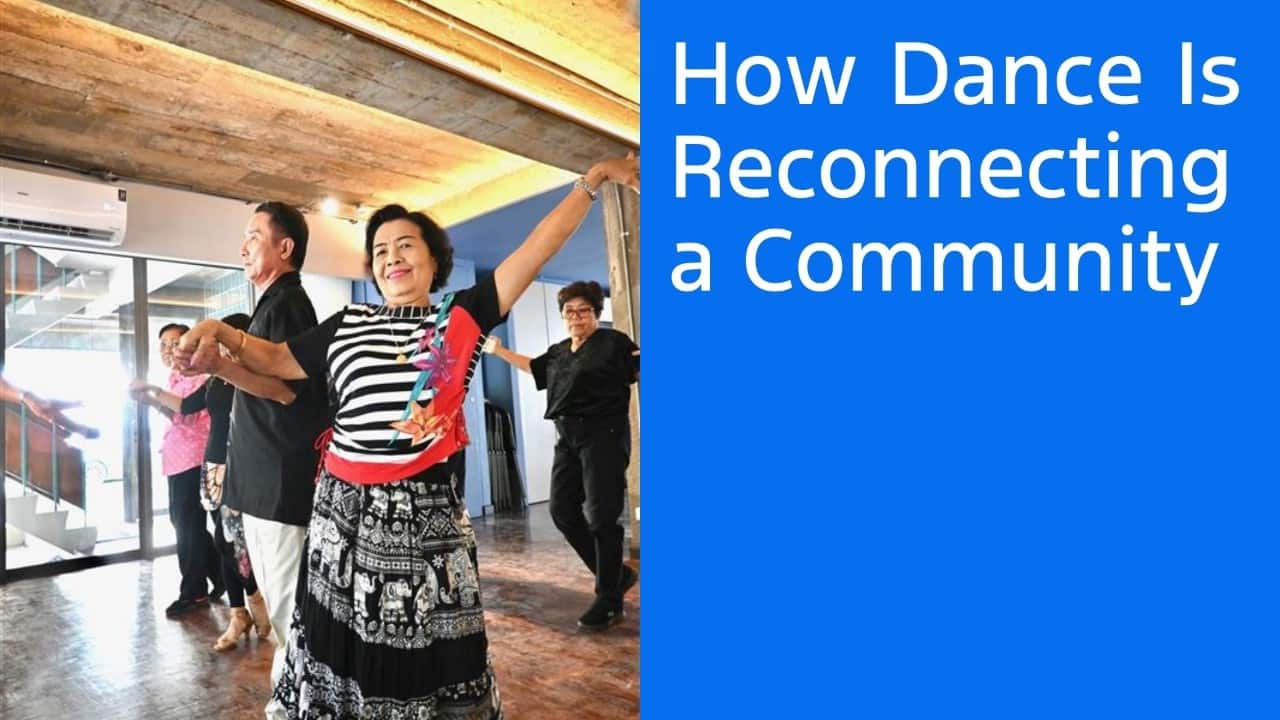
Inside the Ford Community Center in Bangkok’s historic Nang Loeng district, members of the Golden Years dance class step into formation. Some follow the rhythm with practiced confidence. Others pause, laugh, and try again as friends offer encouragement.
From the side of the hall, Suwan Welployngam, known to everyone here as Dang. She smiles as she watches the group move through the graceful hand gestures and flowing steps of a traditional Thai dance.
Dang isn’t the one teaching. But without her, the class might not exist.
A change with time
A longtime resident of Nang Loeng, Dang grew up in a neighborhood known across Bangkok for its vibrant cultural life. The district was a hub for entertainment, home to theaters, music, dance, and performances that drew crowds from across the city.
As the city modernized and the residents grew older, Dang noticed some of the more traditional aspects of life here were fading.
“When I was younger this part of the city was full of music, dance, and neighbors talking to neighbors,” Dang said. “But the way of life is different now, and I noticed my friends becoming withdrawn.”
Dang decided to do something about it
Working with her daughter, husband and close friends who share her passion for dance, Dang helped revive a community program focused on traditional Thai dances.
What began as a small gathering of neighbors gradually grew into the Golden Years dance class, where older residents now meet regularly to dance, exercise and reconnect.
Around the world, moments like this are becoming increasingly important. The World Health Organization estimates that one in six people globally experiences loneliness, and social isolation affects up to one in three older adults. Researchers increasingly link chronic loneliness to increased risks of heart disease, cognitive decline and premature death.
Programs that bring people together, whether through dancing, learning or volunteering, can play an important role in helping older adults stay active, socially connected, and mentally engaged.
A place where paths cross
Today, the Ford Community Center Bangkok provides the space for the Golden Years class to meet each week. The building that now hosts the class officially opened on Tuesday, March 17, 2026, when the center’s campus expanded to create space for community programs like this one.
The newly renovated building, the third to open on the campus, also reflects the history of the neighborhood itself. Once the childhood home of a local resident, the house has been carefully transformed into a welcoming community space while preserving its original character.
Since 2019, the Ford Community Center campus has served as a hub where nonprofit partners provide services and programs for neighbors across Bangkok. The Sati Foundation, through Na Café, offers vocational training for displaced refugees and local youth, helping them build skills for careers in the hospitality industry. Scholar of Sustenance operates a food rescue kitchen that distributes meals to communities in need, while Precious Plastic has created furniture for use across the campus using recycled materials.
With the addition of this third building, partners now have even more room to expand programs for residents of all ages, from after‑school learning in the community library to counseling services and activities for seniors.
“As Bangkok’s population ages, ensuring our seniors have dedicated services and a place to stay connected is a pressing issue for the city,” said Pongpisit Huyakorn, founder of Urban Studies Lab.
“At the FCC, we’ve seen the dance program become an overnight success. The elders are such an essential part of this neighborhood, and seeing them come together, stay active, and remain involved in community life is something that makes all of us very happy.”
Often, the paths of these programs housed at the center cross.
A senior finishing their dance class might pass students arriving for tutoring, while volunteers preparing meals in the community kitchen greet young trainees learning customer service at the café.
These everyday interactions reflect the larger vision of the Ford Community Center: creating a place where neighbors, nonprofits and community leaders can come together to share ideas, support one another, and strengthen the community.
One final run through
Back in the dance studio, the Golden Years class prepares one final run‑through.
Hands rise gracefully in unison as the dancers follow the flowing movements of a traditional Thai performance, steps that once echoed across Nang Loeng's theaters and cultural halls.
A missed step sparks laughter. Someone claps along to keep the rhythm. When the music ends, the group applauds.
Dang watches from the side of the room, smiling.
For a few minutes, the class feels like a celebration of tradition, friendship, and a community finding its rhythm again.
.jpeg/_jcr_content/renditions/cq5dam.web.1280.1280.jpeg)
.jpeg/_jcr_content/renditions/cq5dam.web.1280.1280.jpeg)
.jpeg/_jcr_content/renditions/cq5dam.web.1280.1280.jpeg)