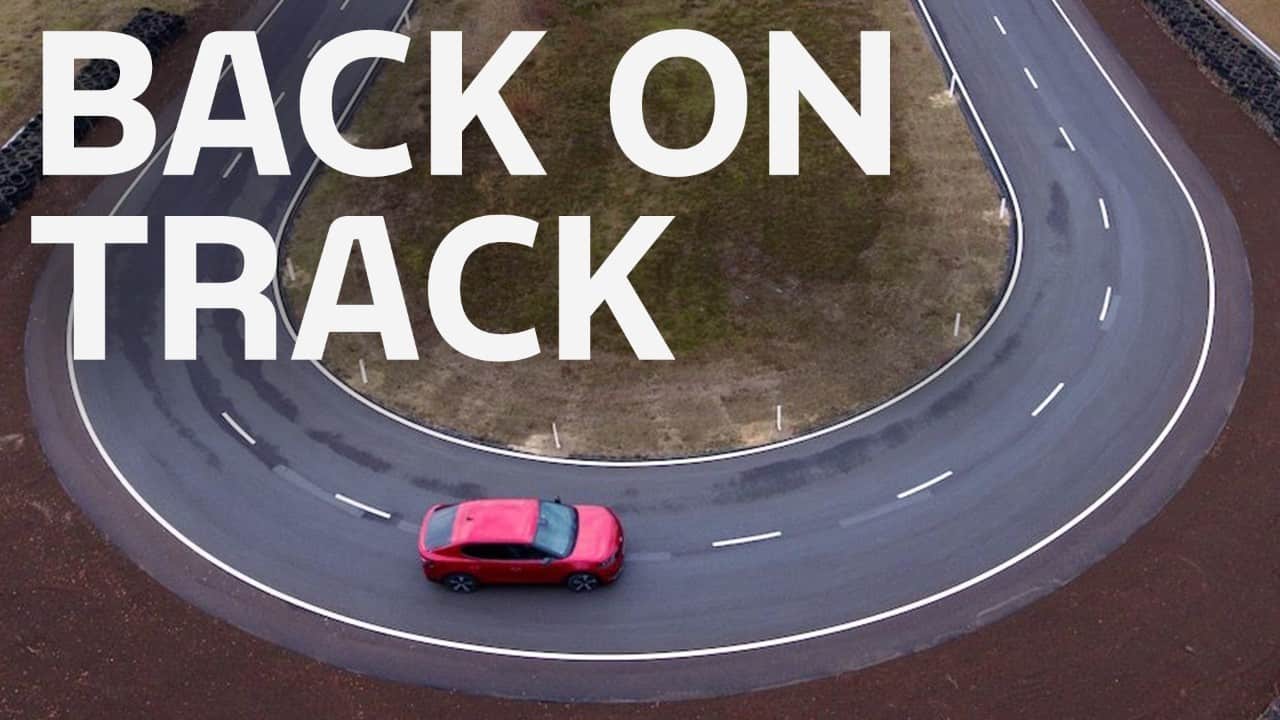
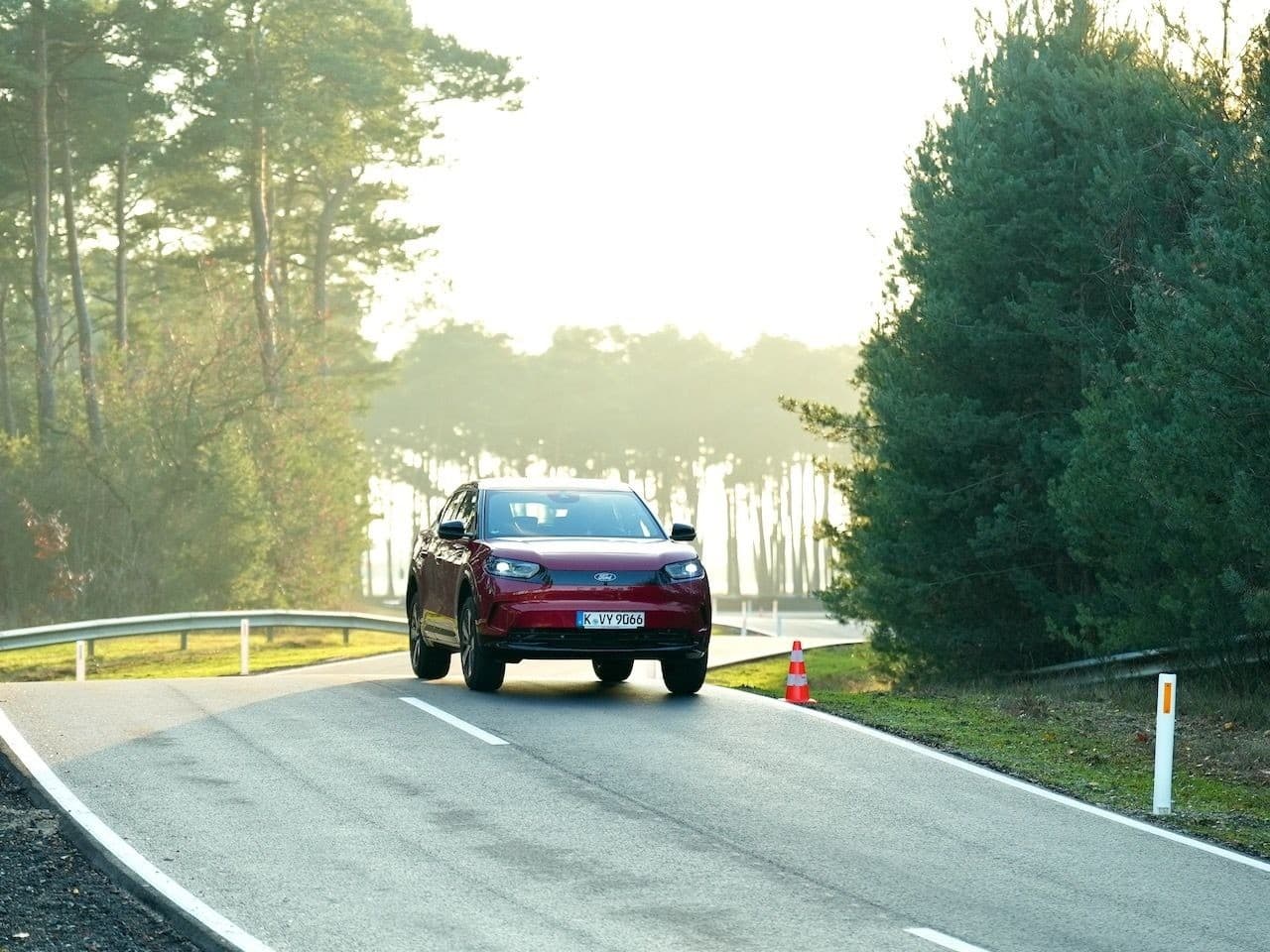
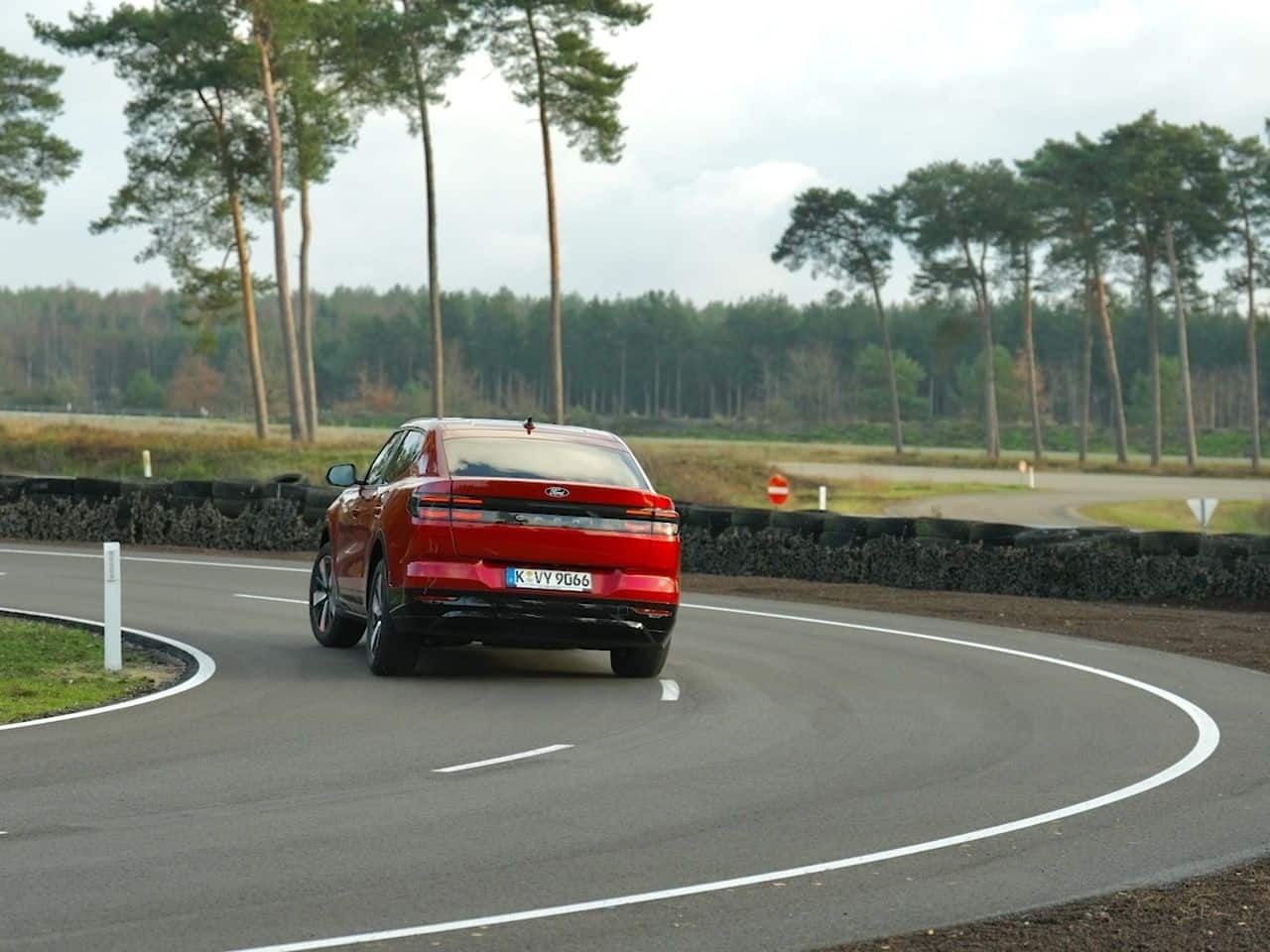
Before any of the old surface could be milled away, a comprehensive 3D lidar scan was carried out, along with a survey of past works, to create an ideal model that removed fatigue and existing paving weaknesses while keeping the target cross‑sections from the original plan.
Milling away the old surface and preparing a solid foundation was the next essential step. On site, a surveying station translated the new geometry into the ground, balancing the updated design with preserved elements of the old foundation and planning the thicknesses for both base and top asphalt layers.
Because the track is quite narrow, the team deployed two pavers working side‑by‑side to lay adjacent lanes in a single pass, creating a seamless, joint‑free surface. Also, before paving, lab tests checked binder hardness, mixture strength, maximum density, and voids.
Lommel’s Erik De Vries explains: “The result is a test‑ready Track 7 with a durable, uniform surface designed for repeatable electronic stability control, vehicle‑dynamics and durability testing. The project also captured valuable learnings in a design‑for‑manufacture package to guide future precision resurfacing efforts and a concise knowledge base for maintenance and planning.
“Acknowledgments go to the Lommel Proving Ground team, Colas Belgium, and Quality Assurance/Quality Control specialists who all made themselves available during day and night over the complete period with their expertise to deliver a high-quality renewal.”