


点击链接阅读中文版:《揭秘工厂背后的AI视觉黑科技》
Search Enterprise or @FordOnline
Popular Terms & Topics:
Popular Tools & Resources:
Inside Ford China’s "AI Vision" Revolution: Turning Smartphones into Industrial Inspectors
Feb 23, 2026

Serval standard smartphones serve as a high-precision AI terminal
On the bustling assembly lines of Ford China’s Hangzhou plant, the chassis inspection station looks surprisingly low-tech at first glance. Instead of the bulky, expensive industrial cameras typical of automotive manufacturing, several standard smartphones are mounted on brackets.
Don't let the hardware fool you. These devices are the frontline of an AI Vision Revolution. Using high-resolution cameras to capture hundreds of chassis components in real-time, they verify assembly quality within two seconds.
This isn't a temporary workaround—it’s a strategic shift.
Data from the recent Ford China Vision Technology & Application Symposium highlights the impact: the Mobile AI Vision System (MAIVS) has already inspected 840,000 components in Hangzhou alone, intercepting nearly 100 potential defects. By shifting quality control to "in-process" monitoring, the plant saves over 3 million RMB annually.
01. Edge Computing: Teaching Terminals to "Think."

The drive for this change stems from increasing manufacturing complexity. The Lincoln Nautilus, for example, features over 300 "Catcodes" (configuration combinations). Traditional industrial vision systems—requiring heavy servers, specialized lighting, and GPUs costing upwards of 150,000 RMB per unit—simply couldn't scale or adapt to such high-frequency flexibility.

MAIVS breaks this deadlock by empowering the "edge." By leveraging the 48-megapixel sensors and powerful neural engines found in modern smartphones, Ford runs AI detection models directly on the device.
Key Advantages:
- Cost Efficiency: Deployment costs dropped from 150,000 RMB to roughly 30,000 RMB per unit.
- Agility: Deployment cycles were slashed from four months to just two weeks.
- Closed-Loop Control: The system communicates via a lightweight IoT protocol, sending "Pass/Fail" results to the plant’s Error Proofing system in milliseconds to trigger immediate line stops if a defect is found.
Furthermore, the system utilizes Small-Sample Agile Training. Engineers only need 15–30 sample images to train a new AI model in 3.5 hours, achieving 99.9% accuracy in complex scenarios like chassis and door trim inspection.

02. Precision Engineering: From Importing to Innovating
Beyond assembly checks, Ford China is validating domestic vision solutions to replace costly imports in high-precision measurement:
- 3D Structured Light: Projects a light mesh to reconstruct 3D models with "microscopic" precision (within $\pm0.02mm$).
- Binocular Stereo Vision: Uses dual-lens geometry and Bundle Adjustment (BA) algorithms to calculate spatial coordinates, offering a significant speed advantage for robotic guidance.
Tests show that domestic 20-megapixel hardware now matches international brands in robustness while reducing costs by 30% to 40%.

03. From the Paint to the Press Line: Real-World Applications
Ford’s frontline engineers are applying these "digital eyes" to solve long-standing manufacturing headaches:
- The "Mirror" Challenge: On the PTO motor line, copper pins are highly reflective, often blinding standard cameras. Engineers implemented Red-Light Auxiliary Lighting to maximize contrast, raising the First Time Through (FTT) rate from 50% to 98%.
- Reading the Line: In the Chongqing Paint Shop, the "Black Roof" process previously relied on workers reading paper tags. By implementing Optical Character Recognition (OCR), the system now "reads" vehicle instructions and automatically routes them to the correct spray booth, eliminating human error.
- Robotic Surgery: At the Sunroof Installation station, 3D sensors scan eight body features to calculate the "vector deviation" between the physical car and the digital model. The system then guides the robot to install the glass with a precision of ±0.5mm
- AI Safety: On stamping lines, simple infrared sensors are often tripped by flying scrap metal. A new Human Feature Recognition system identifies joints and postures (standing vs. crouching), achieving a 100% detection rate for unauthorized entry with zero false alarms.
-
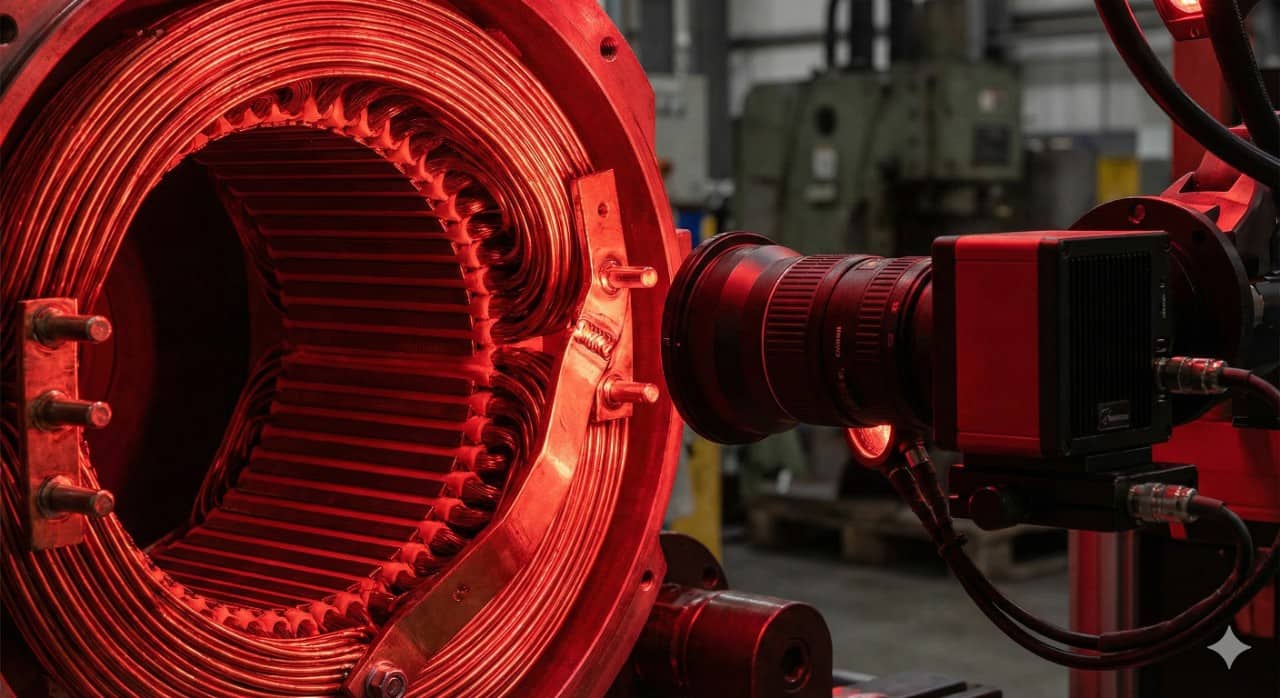 The "Mirror" Challenge: On the PTO Motor Line
1/3
-
|The "Mirror" Challenge: On the PTO Motor Line
-
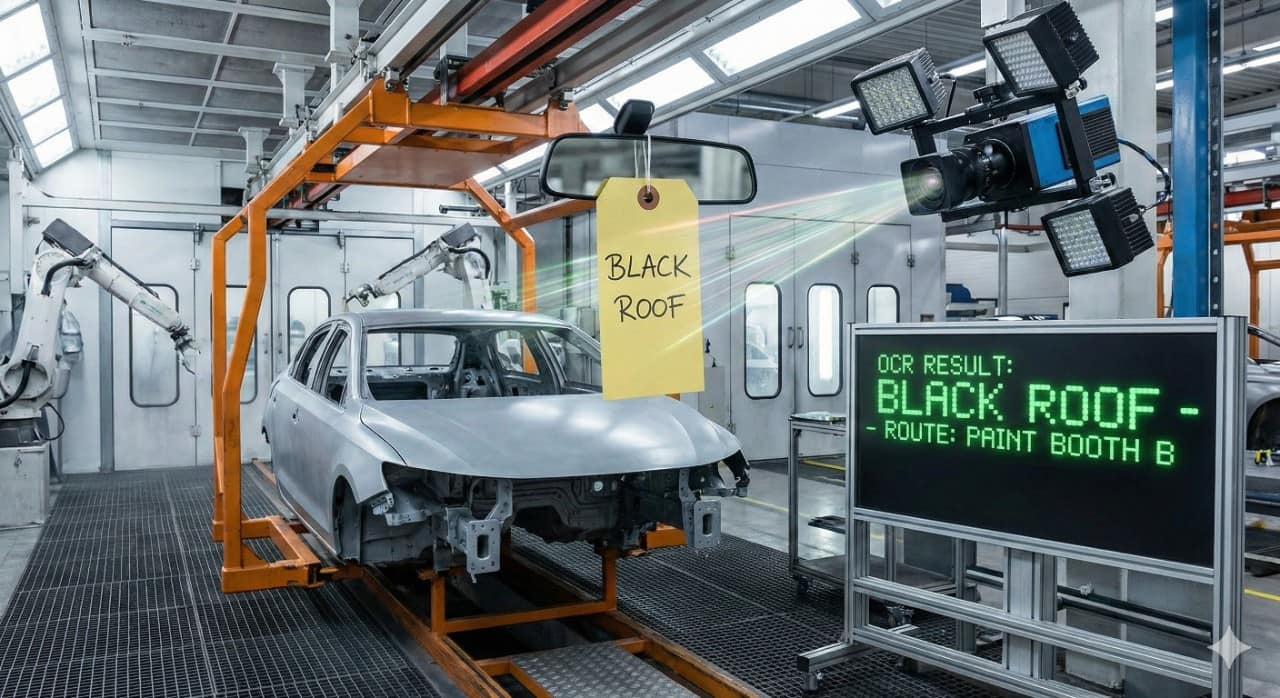 |Reading the Line: In the Chongqing Paint Shop
 -
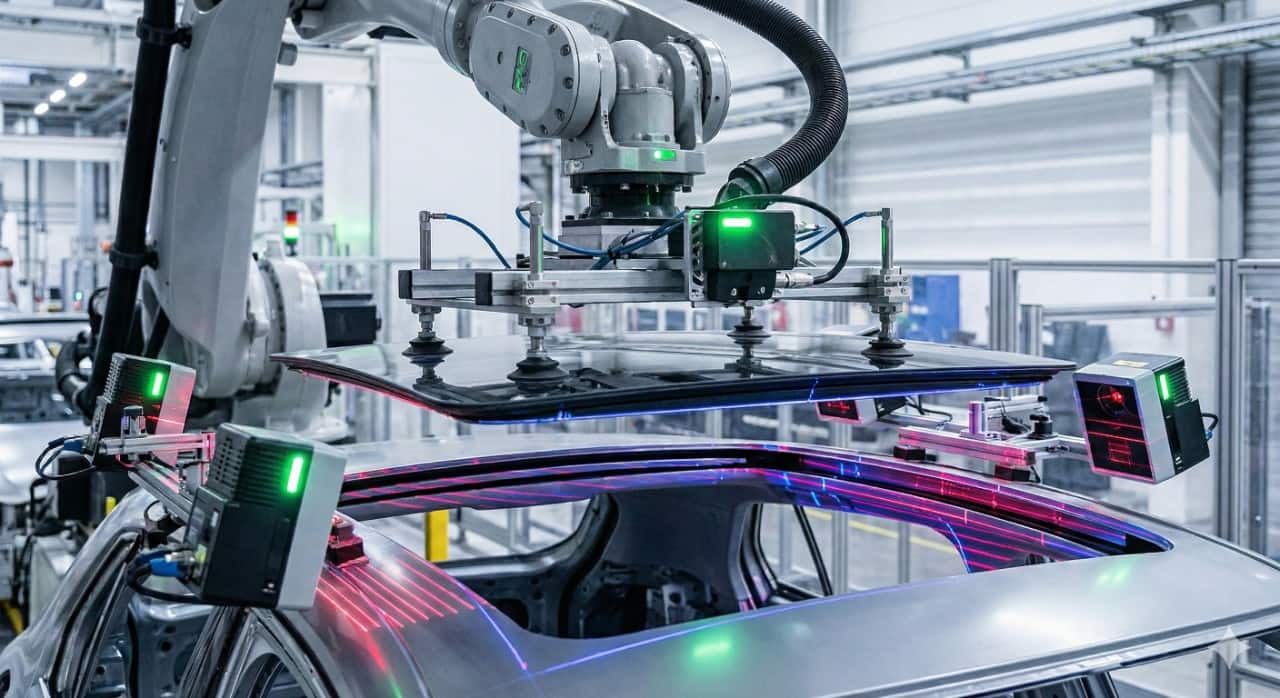 |Robotic Surgery: At the Sunroof Installation Station
 -
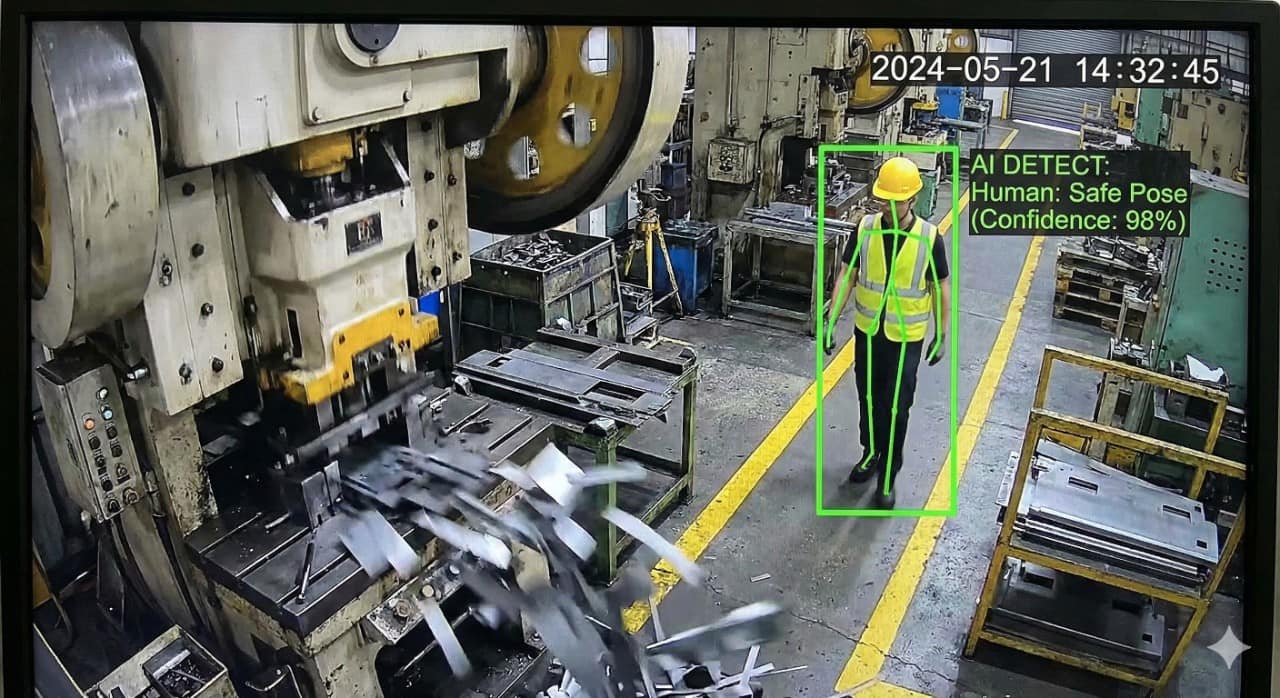 |AI Safety: Human Feature Recognition
1/3
Conclusion: A Quality Promise Verified by Data
From smartphone-based stations in Hangzhou to the vision-guided robots in Chongqing, Ford China is moving from "detecting defects" to "controlling the process." This isn't just about adopting new gadgets; it is about building a digital ecosystem where every bolt and weld is scrutinized by AI.
By breaking down data silos and teaching machines to think, Ford is delivering more than just a vehicle—it is delivering a quality promise backed by rigorous, real-time digital verification.
