Search Enterprise or @FordOnline
Please remove special characters

Six Centuries Later, Taicang Sends Another Fleet on A Long Journey

Oct 22, 2026

点击链接阅读中文版本:六百年后,太仓又送走了一批远行者

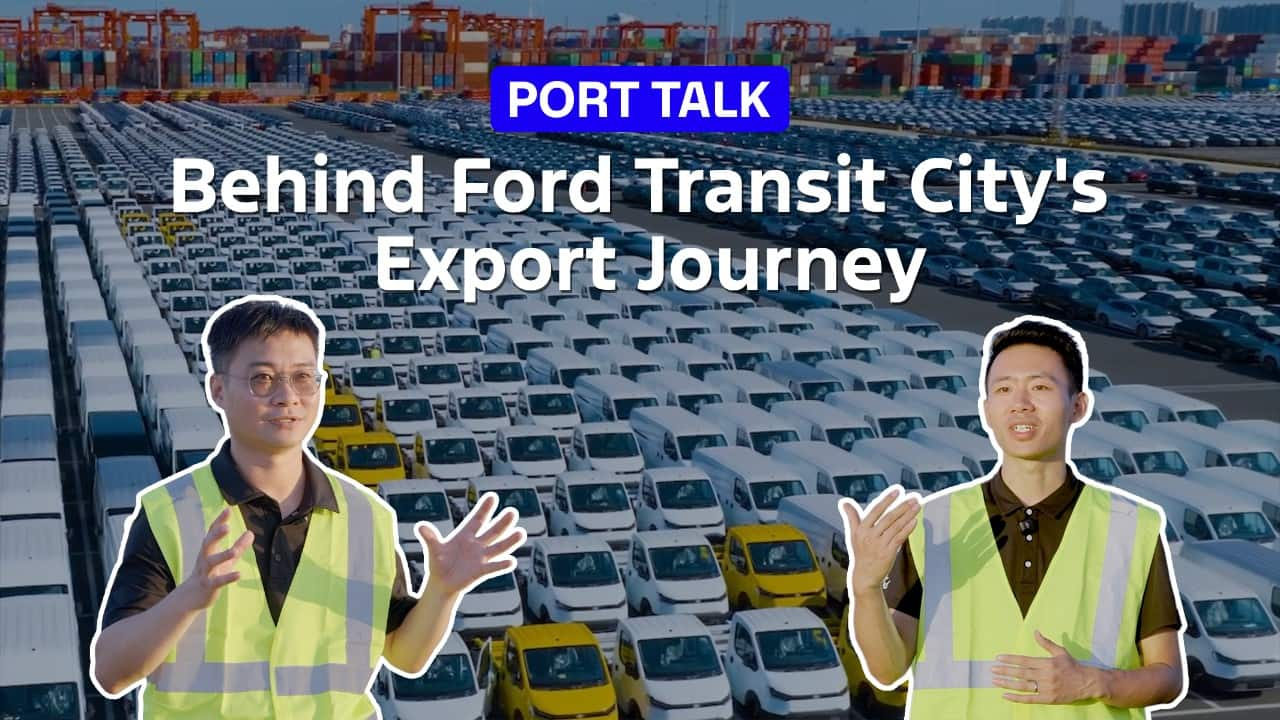
In September, the air at Jiangsu’s Port of Taicang was mixed with the smell of seawater and the sound of cargo ships’ horns. A loading ramp was slowly lowering. Lined up neatly, Ford Transit City vans waited to board, their clean lines catching the morning light.

Click to Enlarge

More than six centuries ago, Zheng He - a Chinese navigator and diplomat in the early Ming dynasty, assembled his fleet here before setting sail. Now, this group of vehicles was preparing to leave for somewhere none had ever been: Europe.

At the port, Peter looked at the orderly lineup, barely able to hide his excitement and pride.

“It feels a bit like sending your child off to college,” he said.

Developed jointly by Ford China, Ford’s global engineering teams and JMC, the Transit City is an all-electric van designed for the demands of modern urban logistics.

“This Transit City lineup includes two van models and a chassis cab. Each is available in left- and right-hand drive, making six versions in all. They need to serve 52 export countries and regions, including the EU, Central and Eastern Europe, and the UK - markets Ford China had never entered before,” Peter explained. “It’s purpose-built for last-mile delivery. We fine-tuned the vehicle’s dimensions and battery capacity to match how customers actually use it in each market.”

“I wanted to get closer to the customer”

Peter has spent 15 years in the automotive industry.

Back then, people called the auto industry “the crown jewel of manufacturing.” Peter later joked that tobacco, aircraft and semiconductors all seemed to claim the same title. Still, the automotive industry was widely regarded as one of manufacturing’s highest peaks. In 2011, he joined Ford’s Nanjing R&D Center—and took his first step into the industry.

A decade later, he moved from interior design into program management. Five years ago, he transferred from the Nanjing R&D Center to Changan Ford. Three years ago, he volunteered to move to Nanchang, where he became Chief Program Engineer for domestic and export programs in the Ford Transit lineup.

Click to Enlarge

“I’ve always felt that I wanted to get closer to the customer,” Peter said. The Transit program gave him the chance to move to the “front line.” He also saw it as part of a broader strategic shift across the automotive industry: from focusing solely on the domestic market to serving domestic customers while expanding exports.

“It was hard because nobody had done it before”

In July 2023, the Transit City kickoff meeting took place in Room 304 at JMC’s PD building in Nanchang. Peter remembers the scene: the entire team was gathered together. It was the first time Ford China had brought a commercial vehicle to the EU—one of the world’s most demanding markets, with some of its strictest regulations.

“When we were discussing specific issues, we’d often ask ourselves why things were so complicated and difficult,” Peter recalled. “But the bigger picture was simple: this was the first time. Nobody had done it before, and that’s exactly why it was so complicated and difficult.”

Click to Enlarge

The program moved quickly. It kicked off in November, and the Program Confirmation milestone was reached before Christmas. At the same time, the export plan expanded from 40 markets to more than 50, adding Asia-Pacific, Brazil and Argentina.

Then Euro NCAP, unexpectedly updated its rating system.

To achieve a stronger Euro NCAP rating, the team decided to redesign and upgrade the safety of the entire front end.

“Ford takes safety especially seriously. It’s always part of the standards we set for ourselves,” Peter said.

The Transit City officially entered production in March 2026. On June 30, it reached J1—Job One—with the first vehicle rolling off the line. By the end of August, the OKTB milestone, or “OK to Buy,” was completed as planned. From July 2023 to August 2026, the journey from PPT to the ship’s deck took exactly 1,133 days.


“The most important thing was building trust”

The hardest part of the entire process was, in fact, building trust. For European customers, JMC was an unfamiliar name, too. How could the team convince them that a Chinese automaker with no previous European exports could deliver a vehicle on time and to the required quality?

Peter helped establish a frequent, face-to-face workshop schedule, inviting European customers to the JMC plant and openly sharing the program’s progress. Once the program entered production, the workshops increased from once a quarter to once a month. The team also traveled to Europe to take part in customer reviews and follow-up discussions in person.

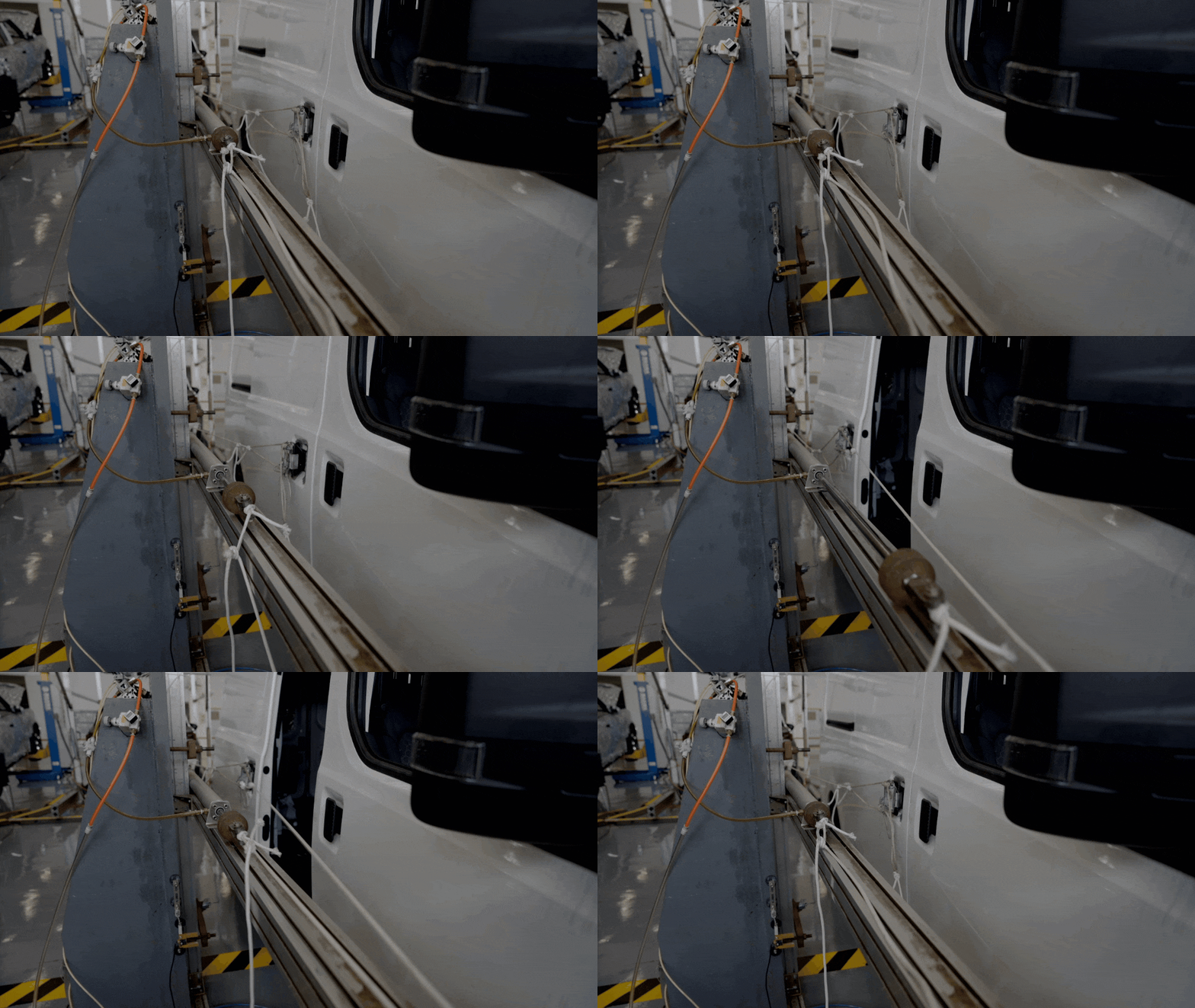
A rigorous discussion about the doors helped strengthen that trust. European customers told Peter’s team that last-mile delivery drivers could get in and out of the Transit City more than 100 times a day. By comparison, a typical passenger-car owner might get in and out only five or six times a day. That meant the door-and-hinge system would need to withstand far more opening and closing cycles than a passenger car’s.

After evaluating the requirements, the team raised the cycle-test standard for the driver and passenger doors from 105,000 cycles to 750,000. To be safe, they added further testing, completing a total of 975,000 robotic simulation cycles. When a test did not pass, the team quickly identified a direction for improvement. They also upgraded the seat fabric’s abrasion resistance.

“We responded to the customer’s needs directly and quickly, and showed that we had the ability to respond fast,” Peter said.

“We achieved many firsts”

Looking back over the three years, Peter’s to-do list is full of firsts.

It was the first time an ESG working group had been established within JMC’s organizational structure to meet EU environmental, social and governance requirements. It was the first one-tonne Class II chassis-cab vehicle in Ford’s product lineup, developed specifically for the European conversion market. The team also had to connect JMC’s and Ford’s very different data-management toolchains for the first time—and translate JMC’s parts-naming conventions and aftersales systems into a language Ford’s dealer network could recognize and use.

Click to Enlarge


One of the most substantial tasks was cybersecurity certification. The EU’s requirements are comprehensive, and JMC had no prior experience with this type of certification. EU regulations R155, covering the Cybersecurity Management System (CSMS), and R156, covering the Software Update Management System (SUMS), require automakers to demonstrate robust cybersecurity capabilities.

Click to Enlarge

As the manufacturer, JMC had to independently establish both systems and pass an on-site third-party audit. Ford, as the brand owner, also had to have its own CSMS and SUMS. Only after both sides’ systems met the requirements could they jointly submit the application for whole-vehicle type approval and obtain the final certificate. Even if a vulnerability were discovered five years after the product had gone out of production, the automaker would still be responsible for fixing it.

Most of this work goes unnoticed. It won’t appear on a promotional poster, but it is what makes it possible for a vehicle to drive on European streets.

Peter’s home is in Nanjing, and his job is in Nanchang. Making the round trip once a week is the line he has drawn for himself. The last train from Nanchang to Nanjing every Friday is his promise to his family; the last train from Nanjing back to Nanchang every Sunday reflects his dedication to work.

“I often feel that I’m letting them down,” he said. His child is starting high school this year, an age when time together matters. But Peter can only piece together moments with them on weekends. Every Saturday morning, he goes to the market with his wife, then takes his child to and from school. He fills the little uninterrupted family time he has each week with as much as he can.

play icon


Back at Taicang Port on that Sunday

The vehicles stood in a neat line before him, waiting to board.

“I hope they shine in overseas markets,” Peter said. He paused, then added, “And I hope they enjoy the journey and do a great job.”

From July 2023 to August 2026, Peter was there for all 1,133 days. He saw the vehicle when it existed only in a PowerPoint presentation. He decided to redesign its front end to meet the tougher rating system. He and his team put the doors through hundreds of thousands of opening and closing cycles, so that a delivery driver could open and close them day after day without noticing anything out of the ordinary.

At the end of 1997, the first locally produced Ford Transit rolled off the line at JMC. Nearly 30 years later, a new member of the Transit family—the JMC-developed and manufactured Transit City—is about to set sail for Europe, the place where the brand was born.Bottom of Form