


点击链接阅读中文版:《走进福特中国最神秘的办公室》
Search Enterprise or @FordOnline
Popular Terms & Topics:
Popular Tools & Resources:
Beyond the Sketch: The Human Stories Behind Ford’s Cars
Dec 04, 2025

At Ford China’s Shanghai headquarters, there are several floors shrouded in mystery. Access is strictly controlled, for this is the birthplace of future vehicles: the Design Center.
In January 2022, the Ford China Design Center was officially unveiled at "B-Link" in the heart of Shanghai’s Yangpu District. Situated on the historic site of the former Shanghai No. 2 Steelworks, the center’s heavy industrial aesthetic has made it a popular city landmark.
Many media outlets have dubbed it "the only fully functional automotive design center within Shanghai’s Inner Ring Road." To possess spacious modeling workshops, a grand review hall, and state-of-the-art equipment in such a prime location is truly a rarity.
This investment goes beyond physical space; it signals a strategic shift, tilting Ford’s focus even further toward the Chinese market.
Consequently, the Chinese design team has gained a greater voice and increased resource support. From trend research, interior and exterior design, and color & materials (C&M) to digital interaction and full-size clay modeling—the team here does it all. They don't just deeply understand local needs with full-process design capabilities; they are now leveraging their China-market experience to influence and benefit Ford’s global models.
-
 Ford China Design Studio
1/6
-
|Ford China Design Studio
-
 |Ford China Design Studio
 -
 |Ford China Design Studio
 -
 |Ford China Design Studio
 -
 |Ford China Design Studio
 -
 |Ford China Design Studio
 -
 |Ford China Design Studio
1/6
Consequently, the Chinese design team has gained a greater voice and increased resource support. From trend research, interior and exterior design, and color & materials (C&M) to digital interaction and full-size clay modeling—the team here does it all. They don't just deeply understand local needs with full-process design capabilities; they are now leveraging their China-market experience to influence and benefit Ford’s global models.
A look back at their recent work highlights the team's growth and breakthroughs:
-
 Ford Bronco Basecamp
1/4
-
|Ford Bronco Basecamp
-
 |Ford Explorer Timberline
 -
.jpg/_jcr_content/renditions/cq5dam.web.1280.1280.jpeg) |Ford Explorer
|Ford Explorer -
 |Ford Equator
 -
 |Ford Equator Sport
1/4
Sylvia Shen, a Design Program Manager, feels this shift keenly. As one of the earliest members of the team, she joined in late 2015 when the design department was just a small, secretive unit focused primarily on advanced design. Back then, her role was mainly coordinating design reviews and studio operations.

Sylvia Shen
After 2018, as mass production design projects kicked off, her role expanded to internal project management within the Design Center.
This transition has been incredibly encouraging for her. It signifies that the China design team has graduated from being a participant supporting global models to a core force leading global design and development.
But beyond strategic shifts and product achievements, we are more curious about the creators behind them:
- How do they define products by uncovering unspoken user needs?
- How do they collaborate with colleagues from diverse cultural backgrounds?
- How do they resolve differences and reach consensus with engineering and marketing teams?
- What personal tastes and personalities fuel their creativity?

To find out, we sat down with several designers to hear their personal stories and paint a portrait of the creators at the Design Center.
Almost every interviewee mentioned that individual ideas are respected here. Designers are not treated as "tools" to simply execute orders; they possess genuine creative freedom. During our chats, two names came up constantly: Max and Simon.
Simon Brook, Chief Designer for Ford China, is known for his approachability and humility. If you bump into him in the hallway, he always asks how you are. Despite working late himself, he constantly reminds his designers to go home early.
This egalitarian, relaxed dynamic largely shapes the team's atmosphere of freedom.
The Design Center is also one of the most culturally diverse departments at Ford China. Julie Hao, a Color & Materials designer, notes how colleagues from different backgrounds inspire each other, joking, "The boss really knows how to pick people!"
The personal experiences and growth of these designers serve as the most important footnotes for understanding Ford China’s design culture and products.
Human-Centered Design: The Vanguard
Looking at the overall design flow, the Human-Centered Design (HCD) department sits at the very front. They conduct research and trend insights, defining the product before passing functional requirements to the interior and exterior designers.

Li Yanhan
Li Yanhan Product Designer
Li Yanhan is a product designer in the HCD department, with a background in designing printers and robot vacuums.
Working on advanced automotive product design at Ford has expanded his horizons. He is no longer limited to product appearance but is now deeply involved in forward-looking insights and product definition, accompanying the vehicle all the way to mass production.
Forward-Looking Insights: Seeing the Future Early
The HCD team excels at capturing user needs that haven't been discovered yet. By studying trend reports and interviewing innovative consumers, they predict lifestyles and product opportunities 3-5 years into the future.
For instance, back in 2018, the team had already identified "camping" and "family outdoor travel" as emerging trends, proposing the now-popular concept of "Urban Outdoor."
Today, these scenarios have become core selling points for many vehicles. Features like the "One-Touch Bed" and "Camping Power Supply" in the Ford Bronco were actually incubated and brewed during that period.
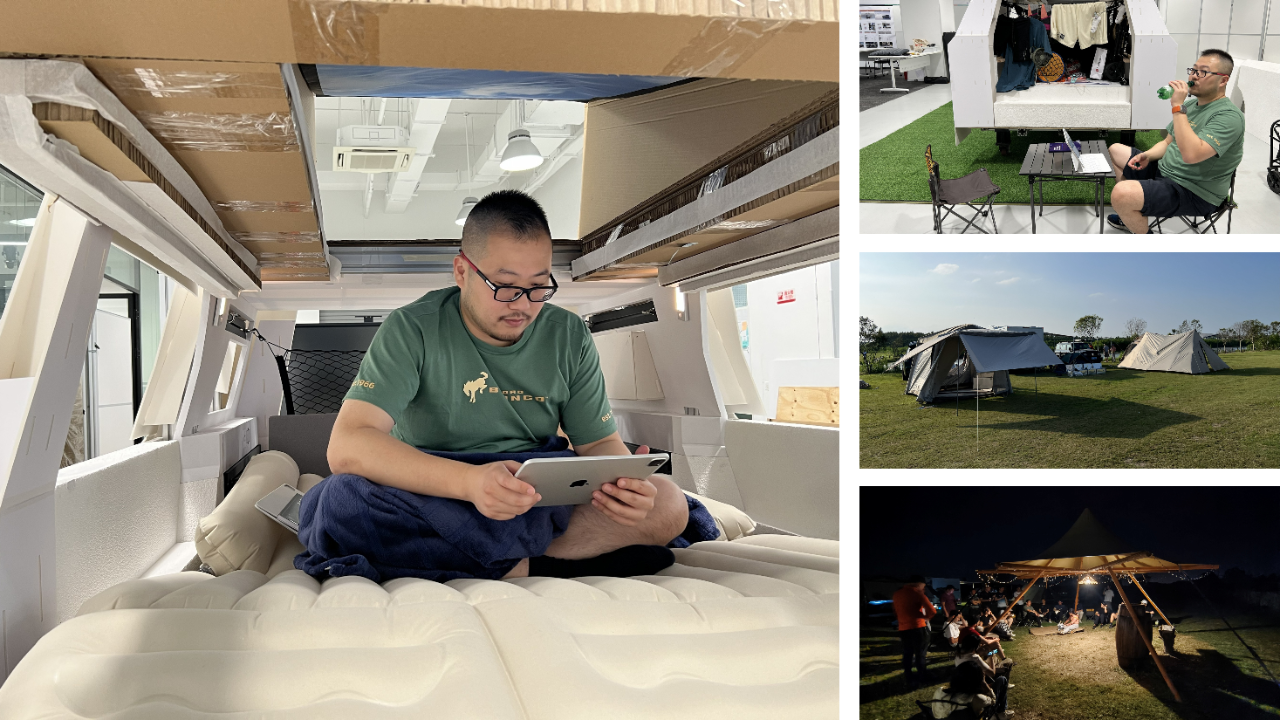
Finding Answers with Users in Real Scenarios
The core methodology here is Design Thinking. Take the development of the Bronco’s "One-Touch Bed" and "Tailgate Table" as examples—Design Thinking ran through the entire process.
First came Empathy. The HCD team joined users on camping trips to observe real needs in outdoor settings. The team organized collective overnight trips, sleeping in competitor vehicles to personally experience the comfort levels and identify pain points.

Product Concept Sketch
Next was Define. Based on their preliminary research and experiences, they clarified the target users' needs and the specific problems the product had to solve.
Then came Ideate. Exploring feasible solutions. At this stage, Li Yanhan turned the team's inspirations into sketches, visualizing product functions in real-world usage scenarios.
Finally, Prototype & Test. They built 1:1 models and placed them in real settings to collect rapid feedback.
The Type-C port in the BroncoBasecamp’s trunk, for example, came from a user noting during prototype testing: "I need to charge my phone while lying down." Similarly, during testing for the tailgate table—originally intended for cooking—a parent pointed out that it was also perfect for children to do their homework.

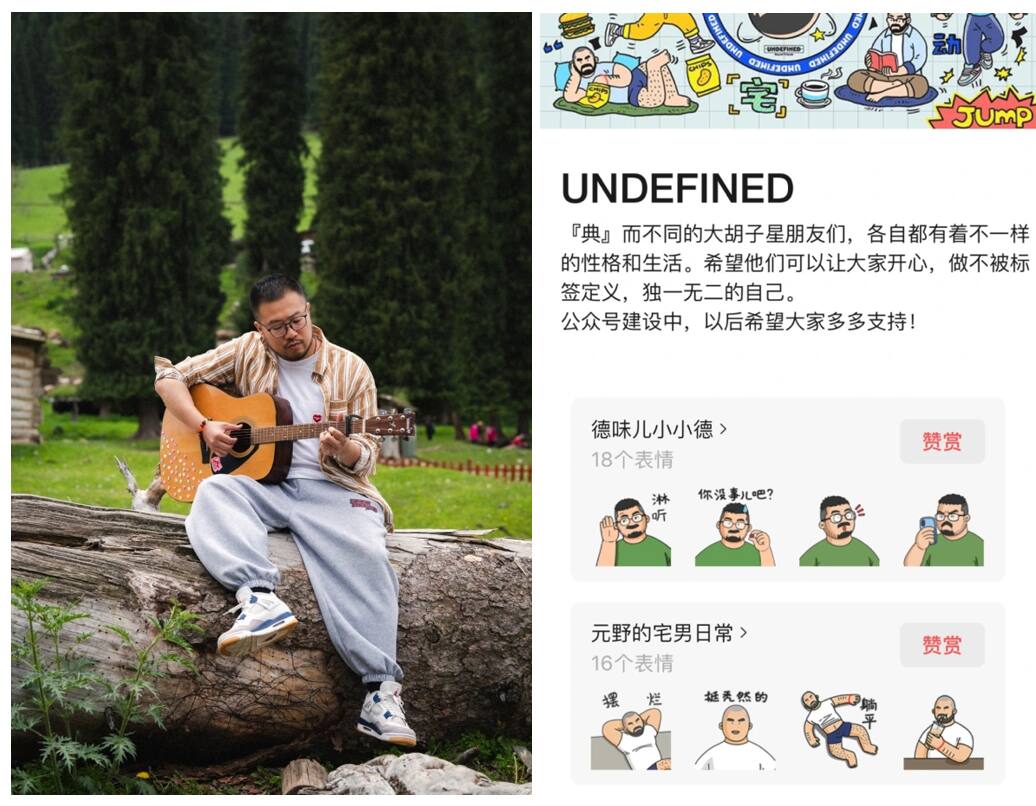
While immersing himself in user interaction requires an open and extroverted approach, Yanhan is actually quite an introvert in his personal life. He loves street photography and DIY crafts, is passionate about manga and illustration, and has even created his own series of emojis!
So far, we have reviewed the evolution of the Design Center and the blueprint of the HCD front-end team.
However, the design landscape extends far beyond this. Next, we will enter a realm of more direct perception and surging creativity: The World of Automotive Exterior/Interior and Color & Materials Design.